
What Your Fireplace Is Trying to Tell You
Signs Long Branch Homeowners Should Notice
A fireplace rarely goes from working perfectly to having a serious problem overnight. More often, it provides clues. A little more smoke than usual, a fire that suddenly becomes difficult to start, an unfamiliar odor, or pieces of masonry appearing in the firebox can all indicate that something within the fireplace or chimney system deserves attention. For homeowners in Long Branch, learning to recognize these changes can make it easier to know when routine maintenance is enough and when professional Long Branch fireplace service should move higher on the priority list.
The Fire Has Become Difficult to Start
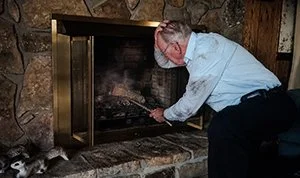
You arrange the firewood the same way you always have, but lately the fire struggles to catch or seems sluggish once it does.
The wood itself could be responsible. Damp or improperly seasoned firewood does not burn as efficiently as dry wood. The U.S. Environmental Protection Agency recommends using properly seasoned wood and notes that wood with a moisture content below approximately 20 percent generally burns more effectively.
However, firewood is not always the problem.
A fireplace depends on proper airflow and chimney draft to keep combustion moving in the right direction. Accumulated soot, creosote, debris, chimney deterioration, or problems with the flue can affect that airflow. If fires consistently perform differently despite using good firewood, the chimney system may need professional attention.
Smoke Wants to Come In
Smoke should travel upward through the chimney, not wander into your living room.
An occasional small puff when lighting a fire can happen under certain atmospheric conditions, but persistent smoke entering the home deserves investigation. Draft problems may result from an obstruction, excessive deposits inside the flue, improper fireplace operation, or another condition affecting airflow.
Smoke stains around the fireplace opening can provide another clue. Darkening that gradually appears on the masonry may indicate that smoke has been escaping into the room more frequently than homeowners realize.
A professional Long Branch fireplace service can evaluate the system rather than simply treating the visible soot as a cosmetic problem.
You Notice an Odor All the Time
A fireplace does not have to be burning to tell you something.
Chimney odors can become especially noticeable during warm or humid weather. Soot and creosote deposits inside the chimney can produce strong smells, and changes in air pressure inside the home may pull those odors into the living space. Other smells can point toward moisture, accumulated debris, or problems elsewhere in the system.
Homeowners sometimes try air fresheners, candles, or deodorizing products first. Those may cover the smell temporarily, but they do not identify its source. If the fireplace suddenly develops a persistent odor, an inspection can help determine what has changed.
Pieces of Brick or Mortar Are Appearing
Finding a small fragment of masonry in or around a fireplace may not seem urgent. Finding them repeatedly is another matter.
Fireplaces and chimneys endure significant temperature changes. Exterior portions of the chimney also face rain, wind, freezing temperatures, and seasonal weather year after year. Over time, masonry joints and other components can deteriorate.
Watch for loose mortar, cracked bricks, flaking masonry, or small pieces accumulating near the firebox. These symptoms should not automatically be assumed to be normal aging. Fireplace and chimney systems rely on properly maintained materials to contain heat and combustion gases. Addressing deterioration earlier may also prevent a localized repair from becoming a much larger project.
The Damper Doesn’t Work Great
Most homeowners do not spend much time thinking about their fireplace damper until it stops cooperating.
A damper that has become difficult to open, does not close completely, or appears damaged can affect fireplace operation. Since the damper helps control the opening between the fireplace and chimney, its condition matters both when a fire is burning and when the fireplace is unused.
Difficulty operating it should not simply be accepted as part of owning an older fireplace. During professional fireplace service, the components involved in safely venting the fireplace can be evaluated as part of the overall system.
You Cannot Remember Its Last Inspection
Sometimes the most important warning sign is the absence of one.
A fireplace can look perfectly normal from the living room while conditions farther inside the chimney remain hidden. That is one reason visual appearance alone is not a reliable maintenance plan.
Routine chimney inspections are designed to evaluate accessible portions of the fireplace, chimney, flue, and venting system. The Chimney Safety Institute of America identifies a Level 1 inspection as the inspection commonly associated with routine chimney cleaning and annual inspection when the system has not significantly changed.
Think of professional fireplace care less like repairing something after it fails and more like periodically checking a system that deals with fire, heat, smoke, and combustion gases every time it operates.
Your Fires Are Producing More Creosote Than Expected
Creosote forms as a byproduct of wood combustion and can accumulate inside a chimney. Burning habits can influence how quickly deposits develop.
Wet wood, cooler smoldering fires, and poor airflow can contribute to inefficient combustion. The EPA recommends burning dry, seasoned wood and maintaining hotter, cleaner-burning fires instead of allowing wood to smolder for extended periods.
That does not eliminate the need for chimney maintenance. It simply means homeowners can play a role in how their fireplace performs between service visits. If creosote accumulation appears unusually heavy, identifying why can be just as important as removing it.
Schedule Your Long Branch Fireplace Service Today

Homeowners become familiar with the ordinary sounds, smells, and behavior of their houses. The fireplace is no different. When something suddenly behaves differently, it is worth asking why.
Unusual smoke, odors, deteriorating masonry, poor draft, excessive deposits, or mechanical problems may each have different causes. Rather than guessing, professional Long Branch fireplace service provides an opportunity to evaluate the fireplace and chimney as a complete system.
Baron's Chimney Service provides Long Branch fireplace service as well as chimney inspections, professional cleaning, repairs, rebuilding, and related chimney services throughout Ocean and Monmouth Counties. For Long Branch homeowners who have noticed something unusual or simply cannot remember the last time their system received professional attention, scheduling service can provide a much clearer picture of its current condition.
A fireplace may not be able to speak, but it can provide plenty of clues. The important part is knowing when to listen.